 By
By
3 Pillars of Asset Management
Introduction
Asset Management can be a complex subject, even when considering the division between Asset management and Facilities Management. The corporate / strategic objectives and the day to day work management that needs to be done.
Outside of the facilities / space management area, Asset Management can be broken down into three distinct areas: Strategic, Data Integration and Work Management. No matter how you define it these three areas are not separate but intertwined with each other. When we look at each area we can see the relationship that exists between them.
-
Strategic outlines the corporate objectives, it aligns the organization with the ISO 55000 set of standards and relies on visibility into the other two areas
-
Data Integration is the layer the combines the various functional disciplines to ensure a consistent data management approach. This layer is the glue that links Strategic and Work Management.
-
Work Management is the working layer, where asset maintenance is performed and the facility is kept in an operating state. The Work Management relies on the Information from the Data Integration layer and the Strategic support for funding and capital improvements.
Strategic Layer
Here we are talking about how the ISO 55000 set of standards is applied to the entire organization. The field of Asset Management is elevated to the corporate level on par with areas such as Risk Management and Financial Management.
Strategic planning requires layers of information that are fed up from the Data Integration and Work Management layers. Information such as the Maintenance Work Load, Overtime requirements and circumstances for the overtime are key information factors that are fed up to the Strategic layer. Additional factors include equipment performance and how the organization will balance capital expenditures for equipment replacement and the need for ongoing maintenance. In addition this layer needs to be able to share information with Risk and Financial Management on issues such as regulatory compliance and implementation of best practices.
Data Integration Layer
This layer is the glue that combines data and information management to ensure that information is delivered to the Strategic and Work Management Layers. This layer deals with a multitude of information sources such as
-
Asset Management System
-
BIM Models
-
SharePoint
-
IOT Platforms
-
Building Management Systems
-
GIS Data
-
ERP Systems
-
Organization Specific External Data Sources
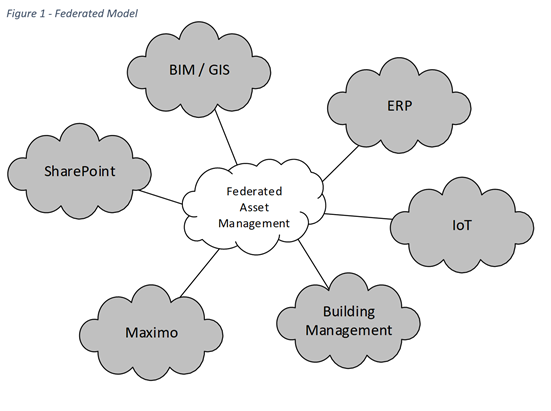
The Data Integration Layer allows for the building of your supporting systems with the “End” in mind. This layer allows for the needed input into the Strategic Management Systems and the Work Management Systems so that everyone is operating with the same information. In this layer we talk about Federated Asset Management where the information is shared across all platforms using a common data language. In most cases a translator (think Rosetta stone) will need to be used to “map” data between systems. These data mappings become a part of the business logic that allows data to move between platforms.
Work Management Layer
This layer is where the rubber meets the road and maintenance work is scheduled, emergency repairs are performed and maintenance contracts are managed. In the case of a regulated facility regulatory compliance work is managed from this layer.
This layer implements concepts such as Reliability Centered Maintenance (RCM) and Schedule Management in addition to standard work orders and Service Requests.
The work management layer requires coordination and information from the other two layers above. Information sharing is one of the critical aspects, considering that a major cost to operation is the time spent searching for information which has been estimated by NIST at $0.23 / square foot annually.
In is in this layer that the 3 main pillars of Asset Management are utilized the most. We have to look at the work management layer as a multimodal layer. Where people are going to look for and use information in a variety of different formats. If we correctly organize the information in the Data Integration Layer, then we can present the same information through a variety of sources.
3 Pillars of Asset Management
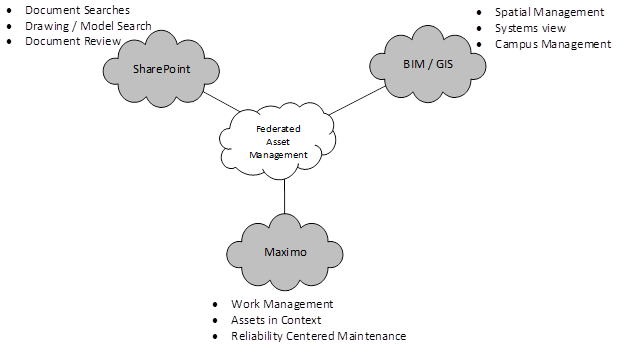
When we dive into the Data Management layer we see how the federated model is organized with systems sharing a common language and thus able to share information. This is done through a series of data mapping elements that become a part of the business logic of the organization. When we look at the dependencies between systems and link up figure 1 according to these dependencies we have a slightly different view of the federated model which looks like figure 2.
Figure 2 - Asset Management Pillars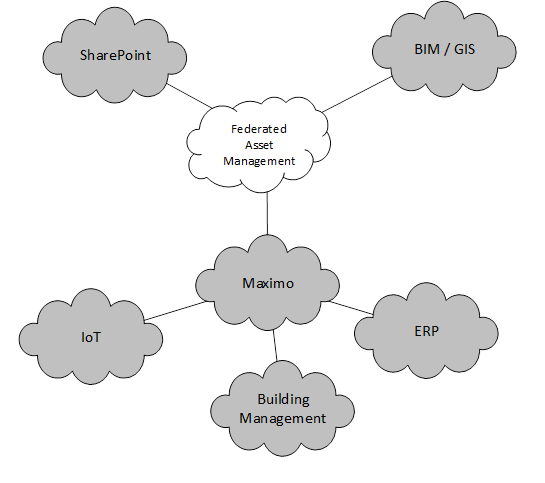
This view gives us the fundamental systems that play a role in the Asset Management Work Management layer and allow for the end users of the system(s) to interact with the same data from different perspectives. Each system presents unique capabilities that are matched to the comfort and skill level of the users, in the end there is no one-size fits all solution. The SharePoint perspective allows for document searching based on a limited number of parameters, such as show all O&M manuals for VAV’s from manufacturer X. Something that is a more cumbersome function in both BM / GIS and Maximo. While Maximo presents the daily interface for the maintenance staff where you can see service requests, outstanding work orders, schedule management, etc. While the BIM/GIS view can show you how work is spatially organized so that correlations can be drawn which may not have been apparent in a report or tabular listing of work. It’s these unique characteristics that we want to leverage across the organization while sharing information.